
 English
 Spanish
澳媒聚焦港口自动化:Koch Solutions分享行业洞见
近日,澳大利亚散货处理领域权威媒体《澳大利亚散货处理评论》对Koch Solutions销售负责人Luke Bennett进行了深度专访,探讨港口自动化技术如何助力码头提升运营效率与资产可靠性。
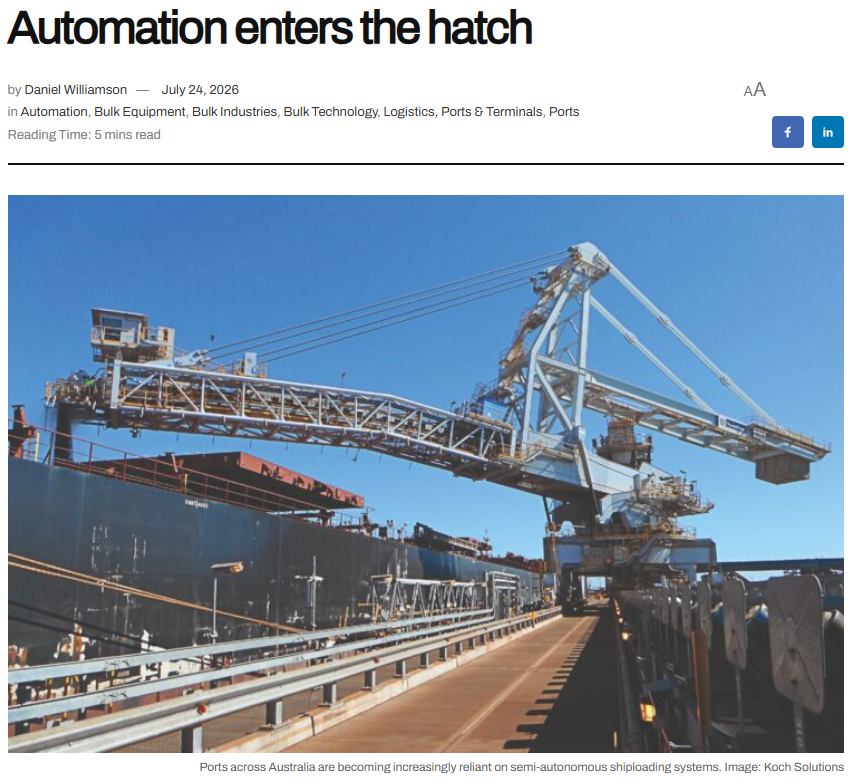
“维持现有产能,但要做得更高效”
Bennett在采访中指出,当前澳大利亚多数大型出口码头关注的焦点并非大幅提升吞吐量,而是如何以更高效、更可靠的方式维持现有产出。“没有人真的在增加吨数,大家关注的是如何让现有的吨数更稳定地走出国门。”他说。
这一趋势在澳大利亚散货港口尤为明显。运营商正将大量资金投入到现有设备的翻新和延寿项目中,包括纽卡斯尔港的装船机升级、昆士兰州的新装船机采购以及西澳大利亚州的翻新计划。
“老龄化”基础设施催生自动化需求
报道指出,澳大利亚相当一部分散货处理设备已服役数十年,但仍是出口运营的核心支柱。直接更换意味着巨大的资本支出和停机成本,这使得设备翻新与技术升级成为越来越多港口的选择。在这些项目中,半自动装船系统正逐步崭露头角。
自动化进入船舱:让每一次装料都精准一致
Bennett介绍,越来越多的客户开始在舱内装载环节引入自动化技术。系统通过高分辨率摄像头、红外成像、雷达和激光扫描等传感器组合,构建船舱和货舱的详细图像,由软件计算出最优装载路径。
“操作工只需将设备定位到舱口,自动化系统就会接管后续的装料流程。”Bennett解释说,“不同操作工的操作习惯差异很大,有人柔和,有人则相对粗放。自动化让每一次操作都保持一致性,设备的使用方式变得更加标准化。”
这种一致性直接带来生产效率的提升:优化船舱填充顺序、减少不必要的机械动作、缩短船舶周转时间,最终意味着更多的货物吞吐量和更高的商业回报。
用自动化“呵护”老设备
半自动化操作还在延长设备寿命方面发挥着独特作用。Bennett指出,对老旧设备而言,通过自动化消除操作中的不一致性和非必要机械冲击,能让设备在更受控、更稳定的状态下运行,从而减轻机械应力。
“如果你有一台上了年纪的设备,让它以自动化的方式运行,是缓解潜在运行应力的有效途径。”他说。
目前,该技术已在澳大利亚多个港口落地应用,包括新一代装船机标配的舱内装载自动化功能,以及西澳主要铁矿石出口设施中采用的类似系统。
“整机系统级理解”是关键能力
对于Koch Solutions这样专注于散料处理设备设计、翻新和优化的企业而言,这一趋势意味着将传统工程经验与新兴数字技术相结合的机会。
“我们的核心优势在于理解整机如何作为一个完整系统运行,”Bennett说,“这些设备不只是装在轮子上的皮带机或溜槽。所有部件协同运动,构成一个整体系统。要成功集成这些自动化技术,你必须理解整机是怎样工作的。”
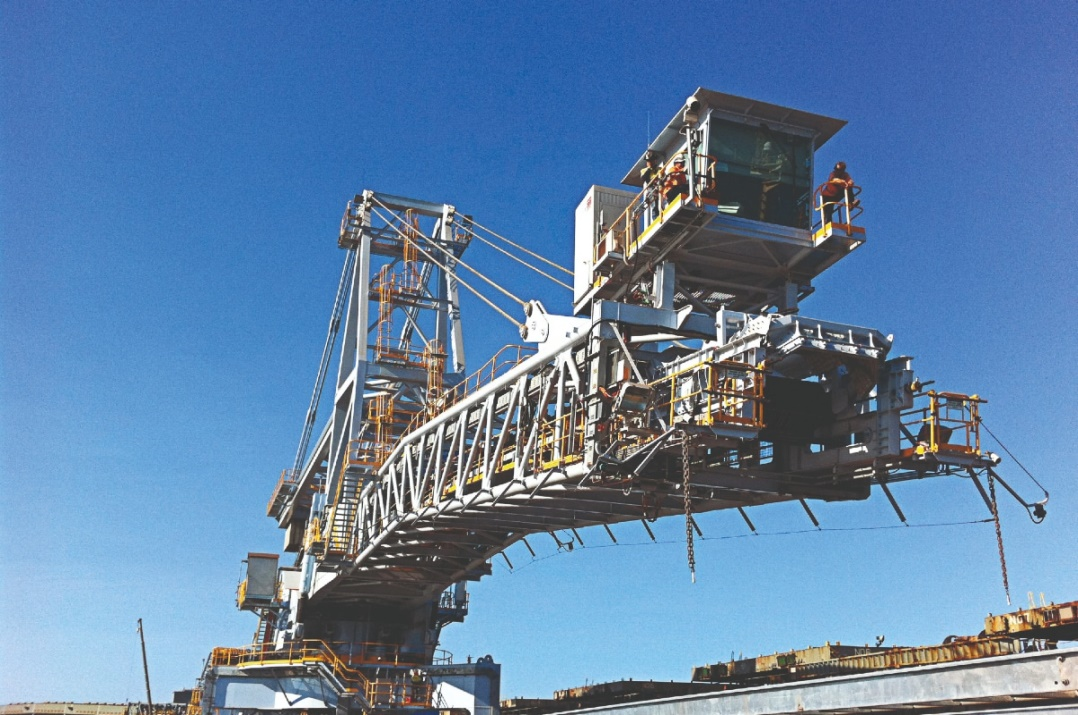
ABHR spoke with Luke Bennett from Koch Solutions to learn why port automation is becoming more prominent.
Automation is already helping ports improve reliability, but for some in the industry, the ability to move more material without expanding existing infrastructure is turning heads.
Koch Solutions head of sales Luke Bennett said many of Australia’s major export terminals are currently focused on sustaining throughput rather than significantly increasing it.
“Everyone’s still going strategically about it, ‘I’ve got so many tonnes going out the door, what infrastructure do I need to keep those tonnes going out the door?’,” Bennett told ABHR.
“No one seems to be adding any tonnes. It’s all about sustaining the tonnes going out the door and doing it more efficiently and more reliably.”
The trend is particularly evident across Australia’s bulk commodity ports, where operators are investing heavily in refurbishment and life-extension projects for existing assets.
Bennett pointed to several major shiploader projects currently underway across the country, including ongoing upgrades at in Newcastle, new shiploader procurement activities in Queensland and refurbishment programs in Western Australia.
However, something all these projects share is a specific, broader industry challenge: ageing infrastructure. A significant proportion of Australia’s bulk handling equipment was installed decades ago and remains central to export operations today.
Replacing these assets outright can involve substantial capital expenditure and downtime, making refurbishment and technological upgrades an increasingly sought after option.
One of the most significant developments emerging from these projects is the growing use of semi-autonomous shiploading systems.
Unlike stackers and reclaimers, which have largely transitioned to autonomous operation in many bulk handling facilities, shiploaders continue to require operators due to the complexity of loading directly into vessels.
Bennett said operators are increasingly being supported by sophisticated automation technologies designed to optimise performance.
“A lot of clients are starting to use automation when they’re loading a hatch,” he said.
“They have a hatch-loading programme that contains the optimum loading sequence. The operator positions the machine into the hatch and then the autonomy takes over and loads the hatch.”
The technology combines a range of sensors and monitoring systems, including high-definition cameras, infrared imaging, radar and laser scanning technologies.
Together, these systems create a detailed picture of the vessel and cargo hold, allowing software to determine the most efficient loading pattern.
“One operator might be smooth on the controls, and another operator might be a lot harsher,” Bennett said.
“Automation makes the operation consistent. Everything becomes quite standardised in how the machine is being used.”
For port operators, consistency translates directly into productivity.
Loading programs can optimise the filling of vessel hatches, reduce unnecessary machine movements and shorten vessel turnaround times. That can deliver meaningful commercial benefits.
“If you can turn vessels around quicker, you improve your tonnes out the door,” Bennett said.
“In some cases, operators can potentially increase outgoing capacity without needing major infrastructure expansions.”
Bennett said semi-autonomous operation can also play an important role in extending equipment life. By removing operator inconsistencies and reducing sudden or unnecessary machine movements, automated systems can reduce mechanical stresses placed on ageing equipment.
“If you’ve got an ageing machine, a way to alleviate potential unwanted stresses during operation is to have those operations done autonomously,” he said. “The machine is being operated in a more controlled and consistent way.”
This capability is becoming increasingly attractive as operators seek to maximise the value of existing infrastructure investments.
The technology is already being deployed at several Australian ports.
Many of the new shiploaders being requested from the industry are advanced hatch-loading automation, while similar systems are also being adopted at major iron ore export facilities in Western Australia.
As the industry continues to balance rising throughput demands with ageing infrastructure challenges, automation appears set to play a growing role in Australian ports. For companies such as Koch Solutions, which specialise in the design, refurbishment and optimisation of bulk materials handling equipment, the shift represents an opportunity to combine traditional engineering expertise with emerging digital technologies.
“Our expertise is understanding how the entire machine functions as a system,” Bennett said.
“These machines aren’t just conveyors or chutes on wheels. Everything moves together and performs as a system.
“To successfully integrate these technologies, you need to understand how the whole machine works.”




 苏公网安备32060102320874